Raspberry Pi at its limit? Here's how to make your home server rock-solid.
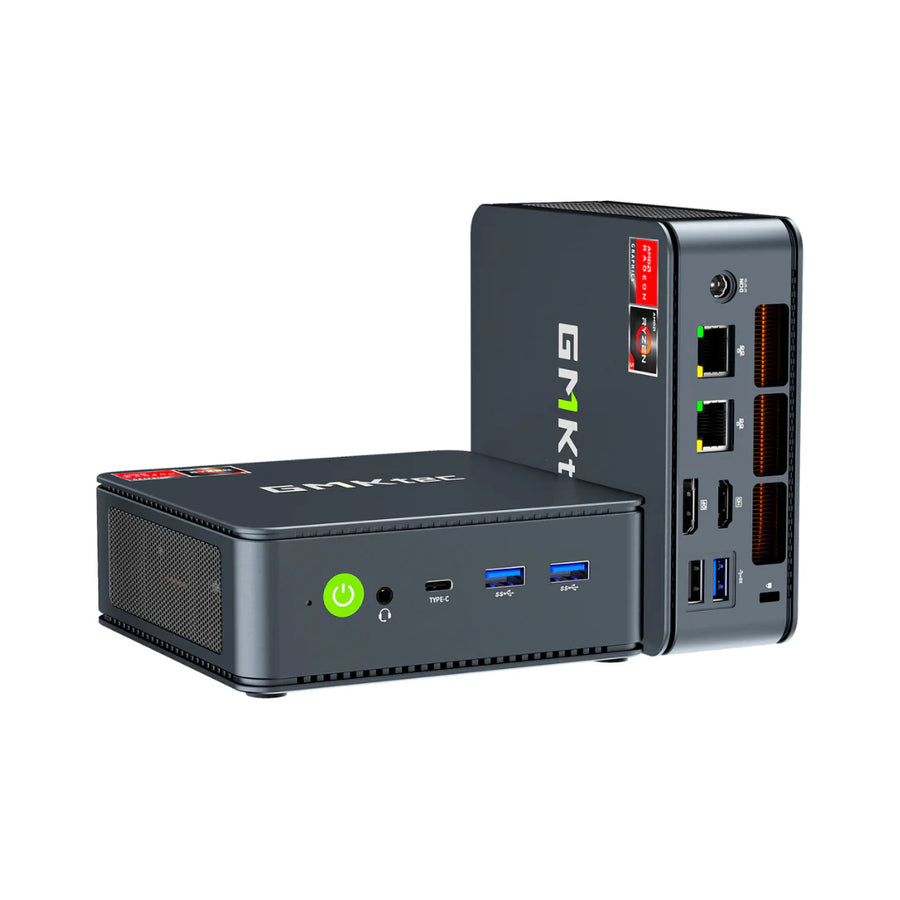
Home Assistant goes down after an SD card crash, Proxmox doesn't officially run on ARM, Jellyfin stutters when transcoding. A small x86 mini PC fixes exactly these problems – with an SSD, more power, faster networking, and a case, power supply and cooling out of the box.
- x86 instead of ARM: Proxmox, OPNsense and every Docker image run officially
- NVMe SSD instead of an SD card – no more data loss from constant writes
- Hardware video encoder on board for Jellyfin and Plex
- Up to 2× 2.5 Gbps LAN for firewall, router and fast NAS
Complete from €249.99with case, power supply, SSD and Windows 11 Pro – install Linux any time
Six reasons Pi users switch to a mini PC
The Raspberry Pi is a great place to start. But once your home server matters, the same problems keep showing up.
“The SD card died again – and Home Assistant won't start.”
A mini PC boots from an NVMe SSD built for constant writes. Database, logs and add-ons run without wearing out a card.
See complete models with SSD“Proxmox, OPNsense or my favourite container isn't available for ARM.”
On x86 everything runs officially: Proxmox VE, OPNsense, pfSense, Unraid, TrueNAS and every Docker image – no unofficial ports.
K8 Plus for Proxmox & many VMs“Jellyfin or Plex stutters as soon as a film needs transcoding.”
The Raspberry Pi 5 has no hardware video encoder. Intel mini PCs bring Quick Sync; AMD Ryzen models have Radeon graphics with their own video encoder.
M6 Ultra as a media server“With power supply, case, cooler, NVMe board and SSD, the Pi isn't cheap anymore.”
A complete GMKtec mini PC with case, power supply, SSD and cooling starts at €249.99 – no tinkering, 2-year warranty.
All models by budget“A single Gigabit port isn't enough for a firewall, router or fast NAS.”
Many GMKtec models have two 2.5 Gbps ports – the K8 Plus even uses Intel i226V, known for being trouble-free under OPNsense and pfSense.
K8 Plus with Intel LAN“Three containers, one VM – and the 8 GB RAM is full.”
Socketed RAM: up to 64 GB DDR4 on the M5 Ultra, two-slot DDR5 on the M6 Ultra and K8 Plus. Upgrade instead of buying again.
Compare models with lots of RAMWhich mini PC replaces your Raspberry Pi?
Sorted by use. Prices from the GMKtec EU shop, as of 21 Nov 2026.
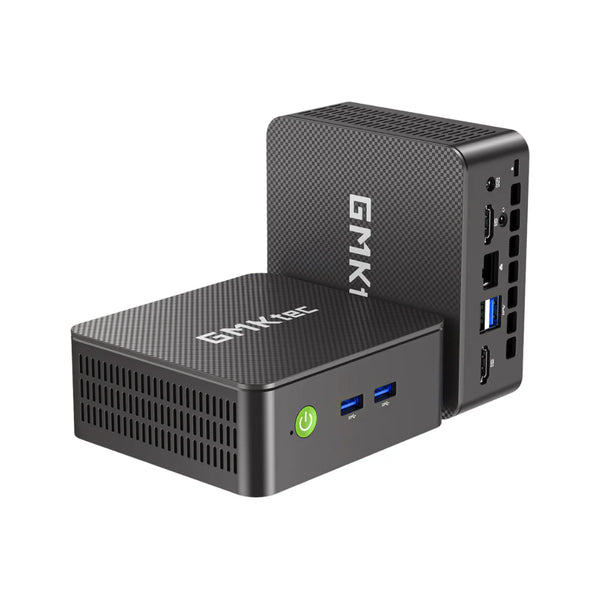 Home Assistant, Pi-hole, small Docker stacksGMKtec G3S (Intel N95)4 cores, Quick Sync for Jellyfin, efficient power modes (8 / 10 / 15 W), 1× Gigabit LAN, up to 16 GB RAM, three M.2 slots.8 GB / 256 GB: €249.99See offerBest all-rounderMedia server, NAS, many containersGMKtec NucBox M6 Ultra6-core Ryzen 5, DDR5, 2× M.2, 2× 2.5G LAN and Wi-Fi 6E. Enough headroom for Jellyfin, Nextcloud and Home Assistant at once.16 GB / 512 GB: €459.99Read more−€30 with code
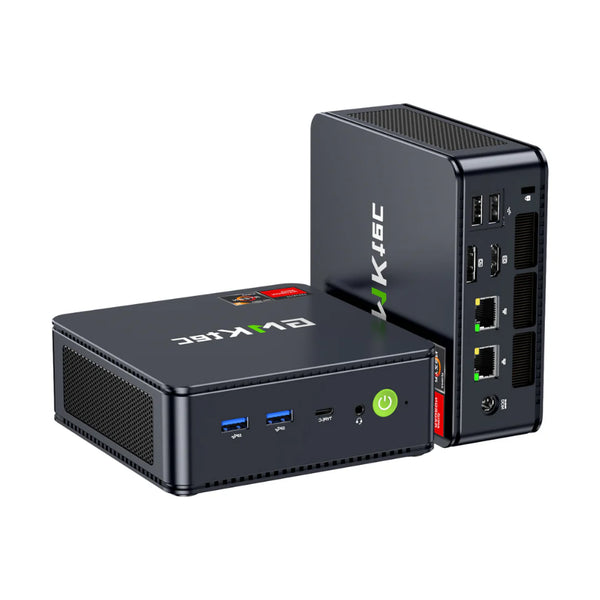 Proxmox starter with lots of RAMGMKtec NucBox M5 Ultra8-core Ryzen 7 7730U, up to 64 GB DDR4, 2× M.2 up to 16 TB, 2× 2.5G LAN. Code BLACKFRIDAY30 on 16 GB + 512 GB.Barebone from €319.99See offerHomelab pro
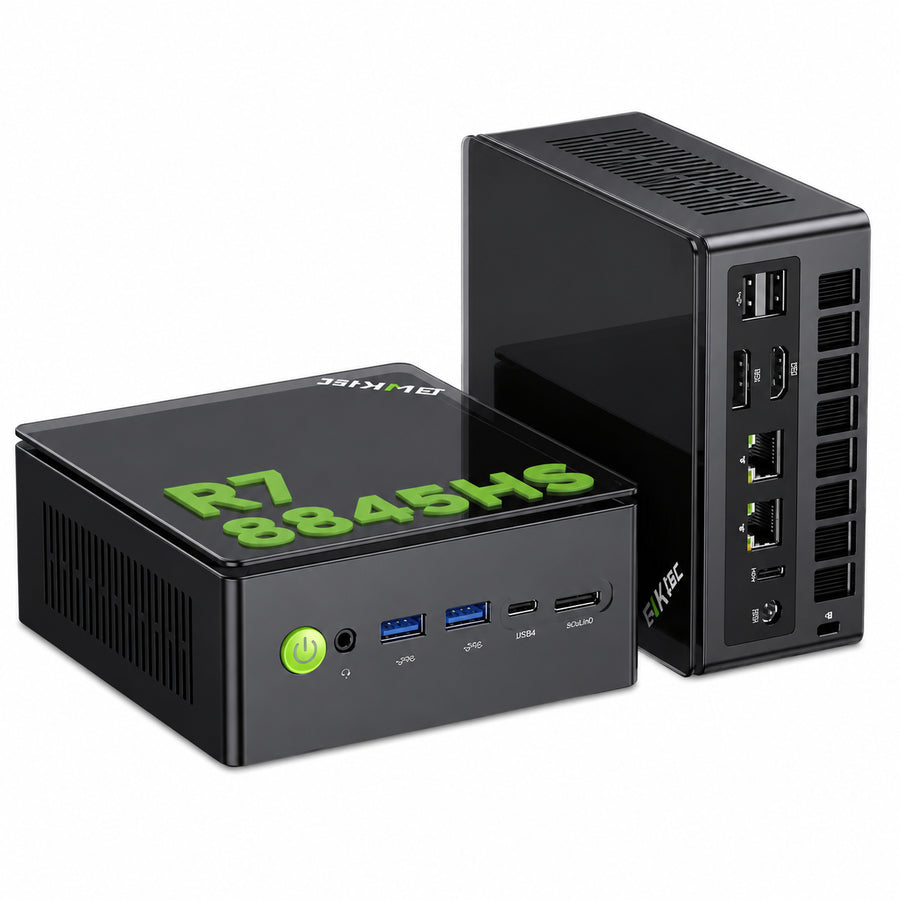 Proxmox cluster, OPNsense, many VMsGMKtec NucBox K8 Plus8-core Ryzen 7 8845HS, 2× Intel i226V 2.5G, 2× M.2 PCIe 4.0 up to 8 TB. Barebone for your own parts.Barebone from €389.99Read more
Raspberry Pi 5 vs. mini PC as a home server
A fair comparison: what you have to add to a Pi, what a mini PC already brings – and where the Pi still wins.
| Criterion | GMKtec M6 Ultra | Raspberry Pi 5 | GMKtec G3S | GMKtec K8 Plus |
|---|---|---|---|---|
| Architecture | x86 (AMD Ryzen 5) | ARM | x86 (Intel N95) | x86 (AMD Ryzen 7) |
| Cores / threads | 6 / 12 | 4 / 4 | 4 / 4 | 8 / 16 |
| Memory | DDR5, 2 slots | Soldered, up to 16 GB | DDR4, 1 slot, up to 16 GB | DDR5, 2 slots |
| System storage | 2× M.2 NVMe | microSD; NVMe only with an add-on board | M.2 SSD, 3 slots | 2× M.2 PCIe 4.0 |
| Networking | 2× 2.5 Gbps + Wi-Fi 6E | 1× Gigabit + Wi-Fi | 1× Gigabit + Wi-Fi 5 | 2× 2.5 Gbps (Intel) + Wi-Fi 6 |
| Hardware video encoder | Yes (Radeon 760M) | No | Yes (Intel Quick Sync) | Yes (Radeon 780M) |
| Proxmox / OPNsense officially | Yes | No | Yes | Yes |
| GPIO pins for electronics | No | Yes | No | No |
| Processor power class | 35–50 W TDP | Very low | 8–15 W (selectable) | 35–65 W TDP |
| In the box | Case, power supply, SSD, VESA mount | Board only | Case, power supply, SSD | Case, power supply (SSD depends on version) |
| Price complete | €459.99 (16 GB / 512 GB) | Board + accessories sold separately | €249.99 (8 GB / 256 GB) | €829.99 (32 GB / 1 TB) |
Raspberry Pi details based on the manufacturer's public Raspberry Pi 5 specifications; GMKtec data per manufacturer, as of 21 Nov 2026. TDP describes the processor's power class, not actual idle consumption.
An honest decision guide
Stay with the Raspberry Pi if …
you drive sensors, LEDs or motors through the GPIO pins, every watt counts, and your server only runs one or two light services such as Pi-hole.
Get the G3S if …
you want a worry-free replacement for Home Assistant, Pi-hole and a few containers – efficient, with an SSD and Quick Sync, at the lowest price.
G3S and other entry modelsGet the M6 Ultra or K8 Plus if …
you're planning Proxmox with several VMs, a firewall with two network ports or a media server for the whole family.
Compare the M6 Ultra and K8 PlusIs switching worth it for you?
Yes, if you …
- run Home Assistant, Pi-hole, Nextcloud or Jellyfin around the clock
- have already lost data to a failed SD card
- want to use Proxmox, OPNsense or x86-only containers
- need more than 1 Gbps on your home network
- want a finished device with a warranty instead of a board plus accessories
Probably not, if you …
- need GPIO pins for electronics projects
- put minimal power consumption above everything else
- only run a single, very light service that works fine on the Pi
What to know before you switch
A bit more power than a Pi
An x86 mini PC needs more energy than a Raspberry Pi. The G3S can be limited to 8 W; the Ryzen models are stronger but also hungrier under load.
Fan instead of passive cooling
All models mentioned here have a fan. They're quiet at idle and audible under sustained load – a spot in the hallway or storage room is ideal.
Returns without a defect cost 15%
GMKtec keeps 15% for restocking on returns without a defect. Check beforehand whether you need 1× or 2× LAN and how much RAM you plan to use.
Switching from a Raspberry Pi: frequently asked questions
Does Home Assistant OS run on a mini PC?
Yes. Home Assistant provides an official image for generic x86-64 computers. Alternatively, install it as a VM under Proxmox – then other services can run on the same device.
Can I move my existing Home Assistant installation?
Yes. Create a full backup in Home Assistant, install Home Assistant OS on the mini PC and restore the backup during setup.
Windows is preinstalled – can I still use Linux or Proxmox?
Yes. You can wipe the SSD any time and install Proxmox, Debian, Ubuntu, Unraid or TrueNAS. GMKtec lists Linux and Ubuntu as compatible.
Which model is suitable for OPNsense or pfSense?
You need at least two network ports. The M5 Ultra, M6 Ultra and K8 Plus each have two 2.5 Gbps ports; the K8 Plus uses Intel i226V. The G3S has only one port, so it isn't suited as a router.
How much power does a mini PC home server use?
More than a Raspberry Pi, but much less than a tower. The G3S can be limited to an 8 W power mode. Actual consumption depends on load, drives and BIOS settings.
How fast will the mini PC arrive?
Orders are usually processed within 1–2 business days. From the German warehouse, delivery within the EU usually takes 2–8 business days.
No more SD card crashes and ARM workarounds.
For most home servers the M6 Ultra is the best mix: 6 cores, DDR5, two SSD slots and two 2.5 Gbps ports – complete for €459.99, shipped from Germany.
- x86: Proxmox, OPNsense, every Docker image
- NVMe SSD instead of an SD card
- 2× 2.5G LAN
- 2-year warranty
Keep reading: related guides
Note: this page contains affiliate links. If you buy through them we earn a commission – your price stays the same. Raspberry Pi is a trademark of Raspberry Pi Ltd; this page is not affiliated with it. Prices and availability can change in the shop at any time. Prices and facts checked on: 21/11/2026.